News!
October 20, 2026
The Hartwell Foundation has given our lab and Pranam Chatterjee's lab at the University of Pennsylvania a Biomedical Research Collaboration Award to find precision therapies for children with neurodevelopmental conditions caused by ion channel variants. The Chatterjee lab will use generative machine learning to predict how each variant changes the shape and function of the channel, and to design peptides that could restore normal channel activity. Our lab will use biophysical neuron and circuit models to predict how those changes alter neuronal firing and cortical circuit activity, and we will test the predictions in human iPSC-derived neurons that carry the patients' own variants. Roy and Pranam both became Hartwell Investigators in 2022, and this award brings their two approaches together, with $770,000 in combined direct costs over two years.
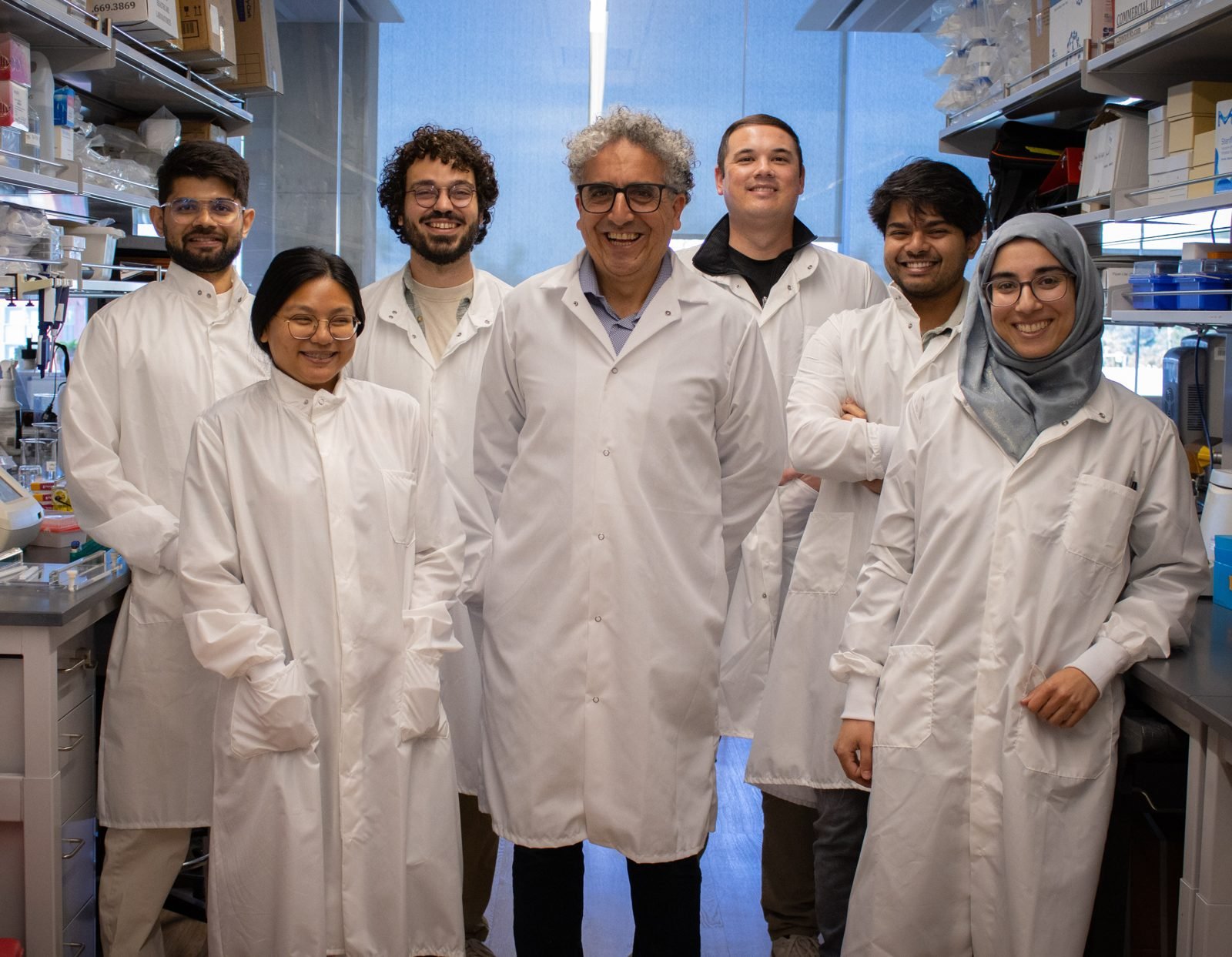
The lab at Aggie Square. Photo by Patrick Hugunin, UC Davis MIND Institute.
June 2, 2026
Can we read a neuron's ion channel makeup from its voltage recordings? Our new preprint with Kris Bouchard's group at Lawrence Berkeley National Laboratory and Kevin Bender's lab at UCSF introduces CoMParE, a meta-learning algorithm that fits biophysically detailed neuron models to experimental somatic voltage recordings. CoMParE reproduces experimental data better than current methods, and we show that this works because meta-learning smooths the loss surface the fit has to search. Tim, Giselle and Kaustubh are co-authors.
Read the preprint here: https://doi.org/10.21203/rs.3.rs-9694895/v1
Read the preprint here: https://doi.org/10.21203/rs.3.rs-9694895/v1
March 26, 2026
Hemiplegic migraine is a severe form of migraine with aura that causes temporary weakness on one side of the body, and most families with it have no known genetic cause. Working with Florence Riant and Anne Ducros in France and Al George's lab at Northwestern, we identified SCN2A variants in two families and in one sporadic case of hemiplegic migraine. All three variants changed the properties of the NaV1.2 channel, and Tim's computational neuron models showed that each one produces abnormal action potential firing. The work widens the range of conditions linked to SCN2A.
Read the paper here: https://doi.org/10.1093/brain/awag109
Read the paper here: https://doi.org/10.1093/brain/awag109
February 20, 2026
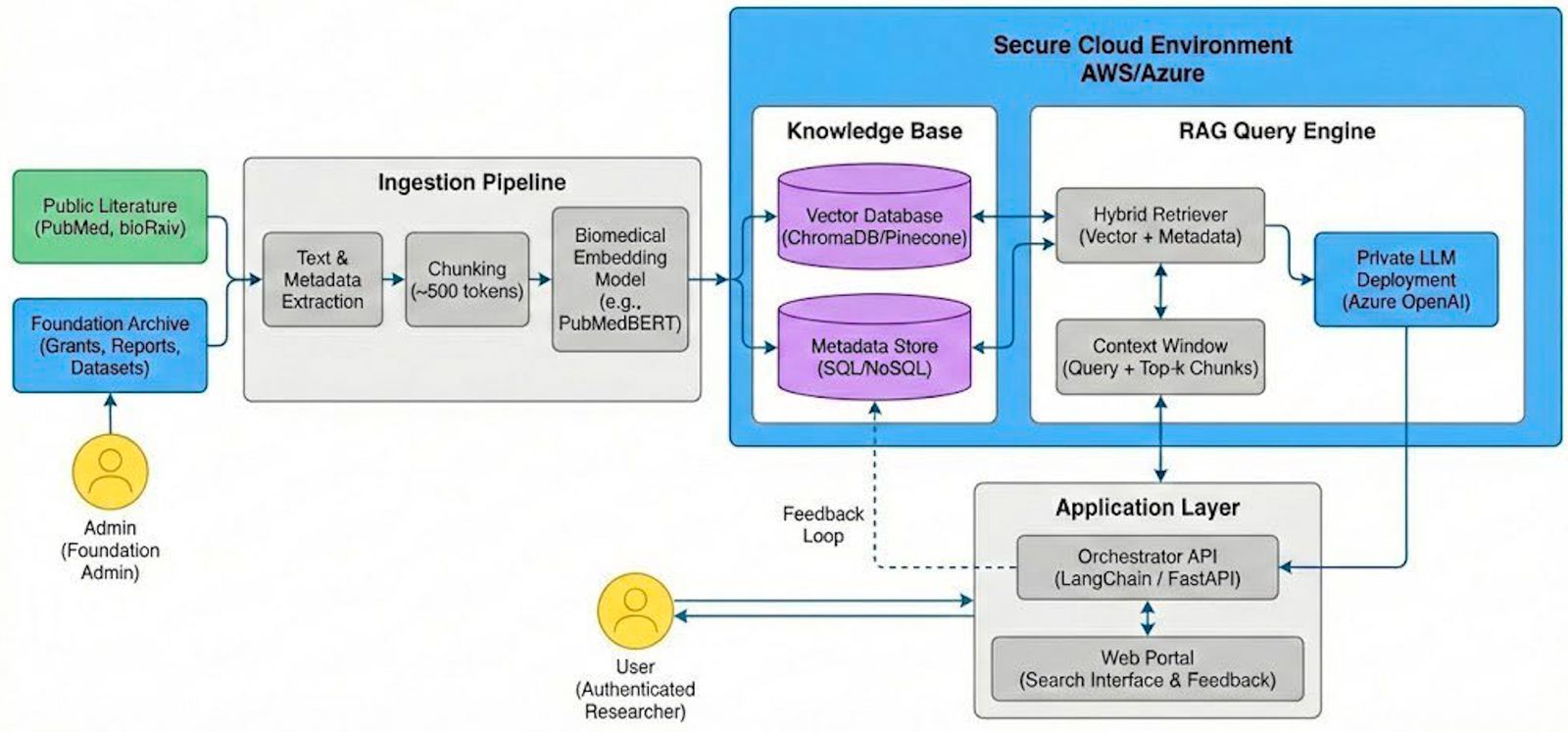
The CDKL5 research community has accumulated substantial knowledge through funded projects, publications, and experimental datasets, but this information remains distributed across individual laboratories and literature databases. CDKL5 Atlas is an AI-powered research coordination tool developed in collaboration with the LouLou Foundation that uses retrieval-augmented generation (RAG) technology to help researchers navigate the growing landscape of CDKL5 Deficiency Disorder (CDD) research. The platform integrates publicly available literature with Foundation-archived materials — including grant reports, experimental protocols, and dataset descriptions — enabling researchers to quickly identify existing resources, find collaborators with relevant expertise, and avoid duplicating experiments. By answering practical questions grounded in verified sources (e.g., "Which groups have experience with HD-MEA recordings in CDKL5 models?" or "What culture conditions have been tested for organoid-based CDD assays?"), CDKL5 Atlas aims to accelerate discovery and strengthen coordination across the CDD research community.
November 24, 2025
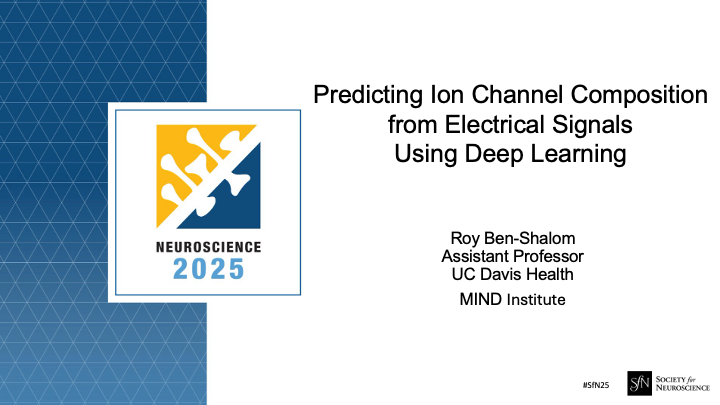
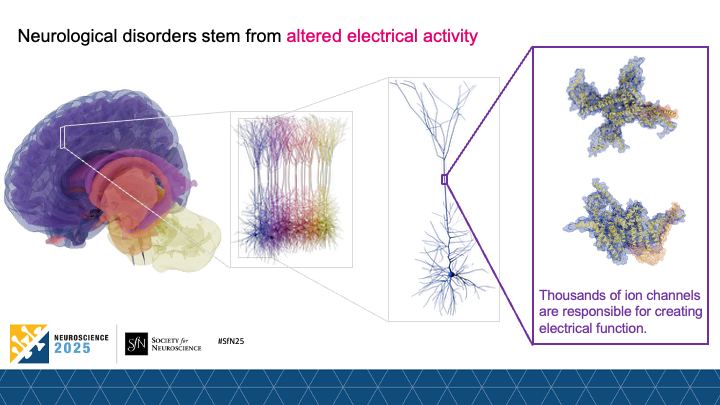
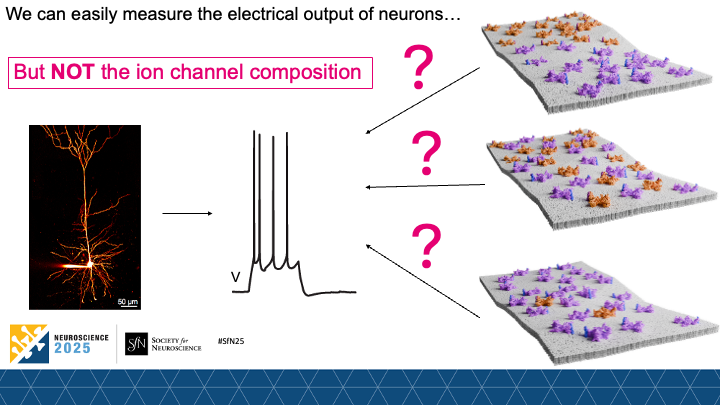
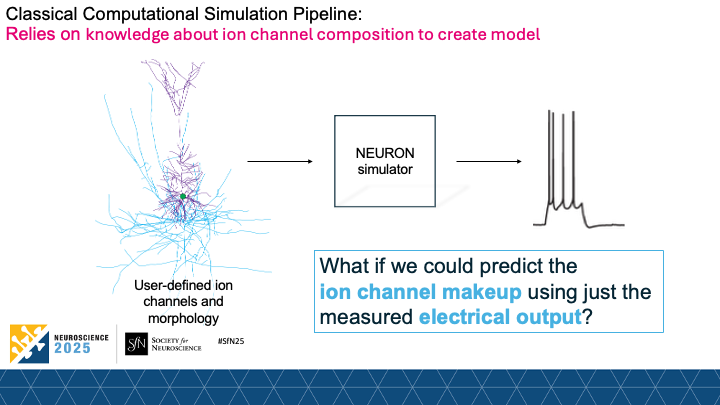
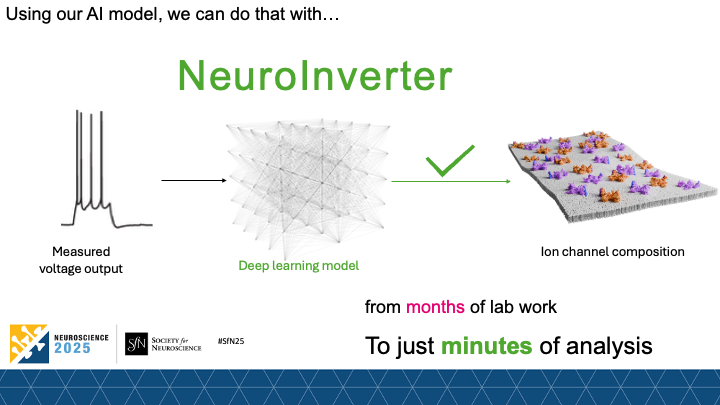
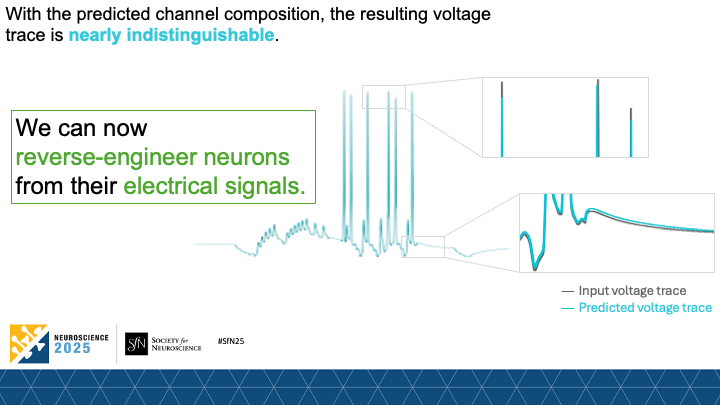
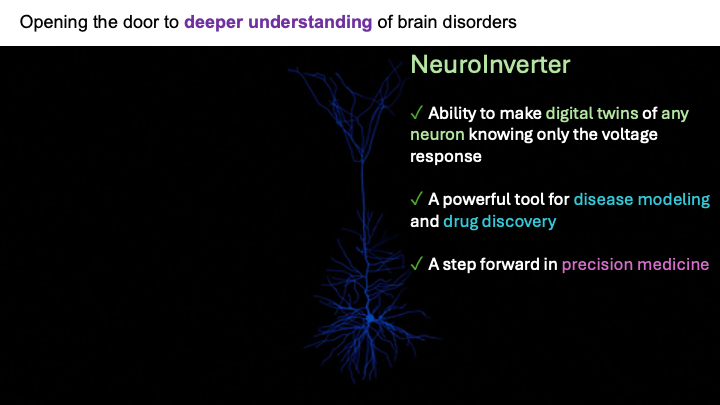
Work by Kaustubh using deep learning to predict ion channel composition using just voltage traces (NeuroInverter) was presented by Roy at SfN 2025 and covered by TheScientist! Of the thousands of abstracts submitted to SfN, Kaustubh's was one of the 40 selected to be highlighted for its advances in neuroscience + AI.
Check out the article here:https://www.the-scientist.com/ai-tools-unravel-thoughts-actions-and-neuronal-makeup-73779
Check out the article here:https://www.the-scientist.com/ai-tools-unravel-thoughts-actions-and-neuronal-makeup-73779
September 20, 2025
Abstract:
Most neurodevelopmental disorders with single gene diagnoses act via haploinsufficiency, in which only one of the two gene copies is functional1. SCN2A haploinsufficiency is one of the most frequent causes of neurodevelopmental disorder, often presenting with autism spectrum disorder, intellectual disability and, in a subset of children, refractory epilepsy2. Here, using SCN2A haploinsufficiency as a proof-of-concept, we show that upregulation of the existing functional gene copy through CRISPR activation (CRISPRa) can rescue neurological-associated phenotypes in Scn2a haploinsufficient mice. We first show that restoring Scn2a expression in adolescent heterozygous Scn2a conditional knock-in mice rescues electrophysiological deficits associated with Scn2a haploinsufficiency (Scn2a+/−). Next, using an adeno-associated virus CRISPRa-based treatment in adolescent mice, we show that we can correct intrinsic and synaptic deficits in neocortical pyramidal cells, a major cell type that contributes to neurodevelopmental disorders and seizure aetiology in SCN2A haploinsufficiency. Furthermore, we find that systemic delivery of CRISPRa protects Scn2a+/− mice against chemoconvulsant-induced seizures. Finally, we also show that adeno-associated virus CRISPRa treatment rescues excitability in SCN2A haploinsufficient human stem-cell-derived neurons. Our results showcase the potential of this therapeutic approach to rescue SCN2A haploinsufficiency and demonstrates that rescue even at adolescent stages can ameliorate neurodevelopmental phenotypes.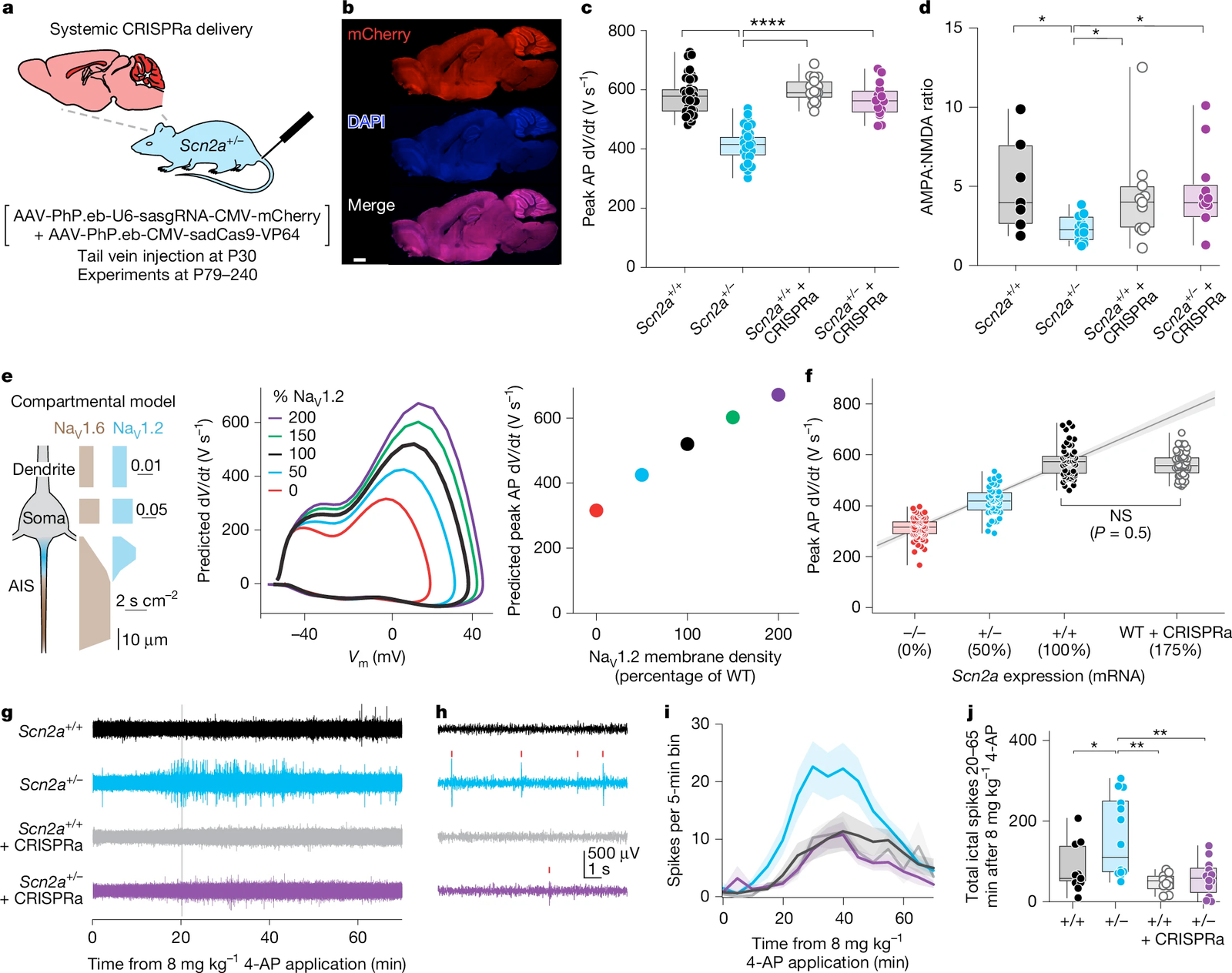 Check out the full paper here:
Most neurodevelopmental disorders with single gene diagnoses act via haploinsufficiency, in which only one of the two gene copies is functional1. SCN2A haploinsufficiency is one of the most frequent causes of neurodevelopmental disorder, often presenting with autism spectrum disorder, intellectual disability and, in a subset of children, refractory epilepsy2. Here, using SCN2A haploinsufficiency as a proof-of-concept, we show that upregulation of the existing functional gene copy through CRISPR activation (CRISPRa) can rescue neurological-associated phenotypes in Scn2a haploinsufficient mice. We first show that restoring Scn2a expression in adolescent heterozygous Scn2a conditional knock-in mice rescues electrophysiological deficits associated with Scn2a haploinsufficiency (Scn2a+/−). Next, using an adeno-associated virus CRISPRa-based treatment in adolescent mice, we show that we can correct intrinsic and synaptic deficits in neocortical pyramidal cells, a major cell type that contributes to neurodevelopmental disorders and seizure aetiology in SCN2A haploinsufficiency. Furthermore, we find that systemic delivery of CRISPRa protects Scn2a+/− mice against chemoconvulsant-induced seizures. Finally, we also show that adeno-associated virus CRISPRa treatment rescues excitability in SCN2A haploinsufficient human stem-cell-derived neurons. Our results showcase the potential of this therapeutic approach to rescue SCN2A haploinsufficiency and demonstrates that rescue even at adolescent stages can ameliorate neurodevelopmental phenotypes.
Check out the full paper here:
Serena Tamura, Andrew D Nelson, Perry WE Spratt, Elizabeth C Hamada, Xujia Zhou, Henry Kyoung, Zizheng Li, Coline Arnould, Vladyslav Barskyi, Beniamin Krupkin, Kiana Young, Jingjing Zhao, Stephanie S Holden, Atehsa Sahagun, Caroline M Keeshen, Congyi Lu, Roy Ben-Shalom, Sunrae E Taloma, Selin Schamiloglu, Ying C Li, Lia Min, Paul M Jenkins, Jen Q Pan, Jeanne T Paz, Stephan J Sanders, Navneet Matharu, Nadav Ahituv, Kevin J Bender. CRISPR activation for SCN2A-related neurodevelopmental disorders. Nature (2025). https://doi.org/10.1038/s41586-025-09522-w
September 18, 2025
Come find their posters in the following sessions:
Giselle
Session Name: Epilepsy Networks and Post-Seizure Modifications
Session Number: PSTR205
Session Date & Time: Monday, November 17, 2025, 1:00 PM – 5:00 PM
Kaustubh
Session Name: Computational Approaches and Experimental Analyses I
Session Number: PSTR145
Session Date & Time: Sunday, November 16, 2025, 1:00 PM – 5:00 PM
Tim
Session Number: PSTR316
Session Title: Voltage-Gated Sodium Channels
Session Day & Time: Tuesday, November 18, 2025, 1:00 PM – 5:00 PM
Giselle
Session Name: Epilepsy Networks and Post-Seizure Modifications
Session Number: PSTR205
Session Date & Time: Monday, November 17, 2025, 1:00 PM – 5:00 PM
Kaustubh
Session Name: Computational Approaches and Experimental Analyses I
Session Number: PSTR145
Session Date & Time: Sunday, November 16, 2025, 1:00 PM – 5:00 PM
Tim
Session Number: PSTR316
Session Title: Voltage-Gated Sodium Channels
Session Day & Time: Tuesday, November 18, 2025, 1:00 PM – 5:00 PM